
Behaviour
DDWA believe that people with disability who behave in challenging ways, are trying to communicate to the people around them that their needs are not being met. Their behaviour is trying to tell us that something in their world is not right.


People with intellectual and other developmental disabilities can sometimes be labelled as having "challenging behaviour". We recognise that it can be really hard to work out what is underlying in a person’s behaviour (e.g. pain, sensory overload, boredom) and to change what is causing the distress, frustration, anger etc.
When people view challenging behaviour as a form of communication, they are less likely to see the person with disability as ‘being naughty’ and more likely to focus on what they themselves might be doing or not doing to meet the person’s real needs e.g. such as supporting the person to communicate their needs.
The information below is designed to help understand and better respond to people who can sometimes behave in challenging ways.
Resources

What is your child's challenging behaviour trying to tell you?

I am trying to tell you something!

Supporting School-age Children with Fetal Alcohol Spectrum Disorder

Pain - A Guide for Parents

Creating Sensory Aware Environments
Sometimes people with disability have heightened sensory awareness. This could be a sensitivity to noise, light, touch, or certain textures. Sensory sensivitiy can cause a behavioural reaction to stimulii in the environment such as constantly moving, covering ears or becoming agitated. Creating sensory-friendly environments can make a positive difference to prevent sensory overload and promote overall well-being.
- Design environments with soft lighting, quiet areas, and sensory-friendly materials. Consider offering noise-cancelling headphones or providing sensory breaks.
- Seek guidance from local occupational therapists for creating sensory-friendly environments. The WA Occupational Therapy Association can connect you to resources and supports.
- Seek to understand what is underlying a person’s behaviour (e.g. pain, sensory overload, boredom) and make changes to the environment.
Online Learning
Foundations to understanding behaviour
This free learning package of five video modules was developed to help you enhance your knowledge and skills around supporting people with disability and complex communication needs.

Further Reading and Resources
Volume is a research based program developed from activities completed for a PhD program at Edith Cowan University by Delyse Clayden. Delyse is a sessional academic in the School of Education at ECU. Her research focus is on autistic student voice in reasonable adjustments and promoting teachers to work in consultation with the child
Coming from the perspective of a parent of children with disabilities, and a researcher, Delyse understands the value of voice and collaboration to achieve the best outcomes for all.
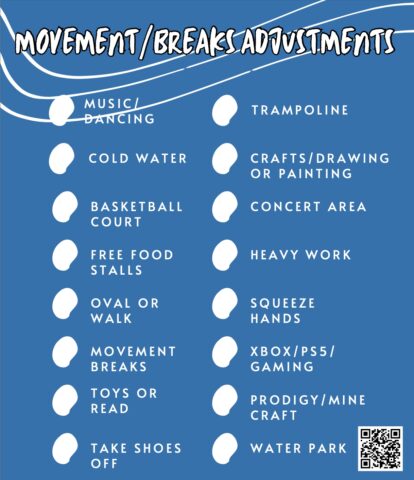
Classroom Adjustment -prompts from students
This resource was developed from conversations held with students about their ideas for what helps them in the classroom. They can be used as conversation starters with students or ideas for making classroom adjustments. For more information about this research, please contact Delyse.
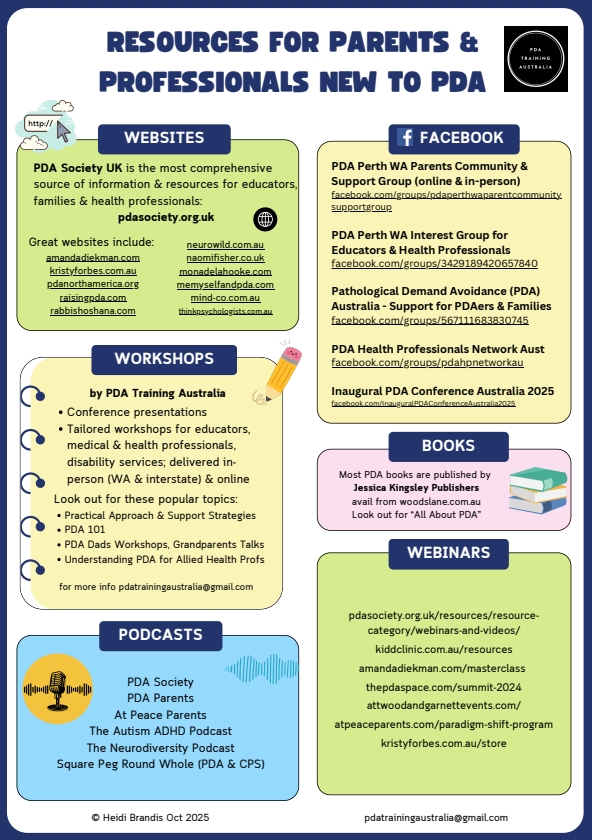
About Pathological Demand Avoidance (PDA)
Pathological Demand Avoidance (PDA) is a profile that describes those whose main characteristic is to avoid everyday demands and expectations to an extreme extent (from pdasociety.org.uk)
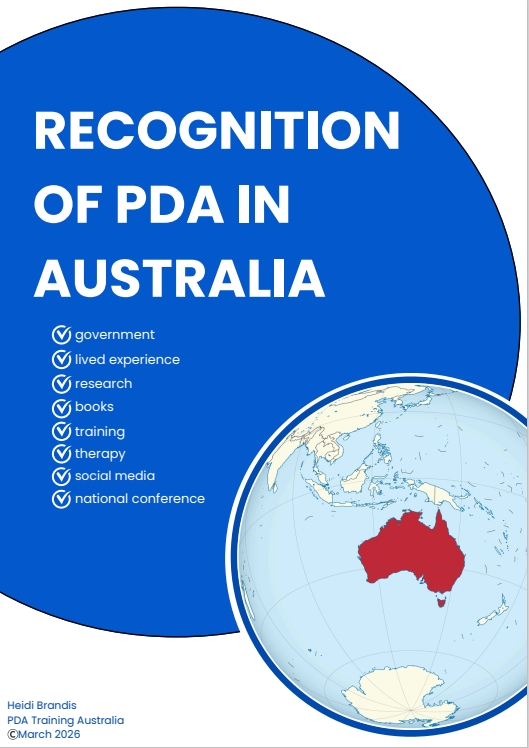
Heidi Brandis, author of the original Autism Parent's Handbook, has developed a resource for Educators about supporting autistic students with a PDA profile called: Support Strategies at School (updated January 2026)
- You can download the PDF here: PDA Support Strategies at School January 2026) (PDA Training Australia).
Visit PDA Training Australia Facebook page HERE.

FAQ's

All About Me Book (What is important to and for me)

How do I let my child’s teacher know about their interests and stressors?

Behaviour Support Plans, Management Plans & Supports

What if I don’t have a behaviour support plan or funding, but I need help to support behaviour and aggression at home and school?

How do I find a behaviour support practitioner?

What is behaviour support & Why do we need it?

What is challenging behaviour?
DDWA Services


Information, Guidance and Support
We provide information to people with disability, family members, carers and supporters, across Life Transition Stages to help you to Self-Advocate and Navigate Systems including:
- getting a diagnosis
- navigating disability services and the NDIS
- starting school and negotiating the school journey
- making friends
- turning 18
- getting a job
- staying safe and healthy
- starting a relationship
We also provide information and guidance to support you to self-advocate in any area where laws have an impact on the person with disability's life, such as information about State Administrative Tribunal (SAT) in respect to Guardianship and Administration matters, Child Protection, Enduring Power of Attorney, Advanced Health Directives and preparing for illness/death of a parent.
For a full list of the areas we cover, see our Focus Areas Page Here.
Cost – This is a free service.

Side by Side Peer Community
Side by Side began as a project in 2012 for families experiencing behaviour which could be seen as challenging. The project connects families experiencing challenging behaviour with other families though a supported peer group, an active online community and in person events. Side by Side is a safe place to receive support and help each other.
For information and how to join, contact:
Bronwyn Pike: bronwyn.pike@ddwa.org.au, or
Maggie Visser: maggie.visser@ddwa.org.au
Website: ddwa.org.au/services/family-peer-support-side-by-side
Independent Support Coordination
DDWA are a registered NDIS provider for support coordination.
We can support you to fully understand and implement the funded supports and services in your NDIS plan.
This service is currently at FULL CAPACITY.
Behaviour Support Practitioner Register
If you are a Behaviour Support Service Provider and would like to access a Practitioner to sit on Quality Assurance panels from the Register of Behaviour Support Practitioners, please click on the button.