
Health
People with disability have the right to the enjoyment of the highest attainable standard of health without discrimination.
(Article 25, Convention on the Rights of Persons with Disabilities).

DDWA recognises that people with intellectual and other developmental disabilities often face barriers to accessing health services. Some of these may include:
- support to communicate how they are feeling, or what may be wrong
- availability of information in accessible formats
- support to understand the significance of symptoms
- requirements of standard diagnostic tests e.g. sitting still or sensory issues
- being excluded from routine health reviews and screening
- previous traumatic experiences in health settings
- health staff being unfamiliar with characteristics of specific disability types
- health staff making judgements about what services should be provided
- health staff misattributing signs and symptoms to the disability, rather than to an unrelated health condition
Resources

There's no such thing as a silly question
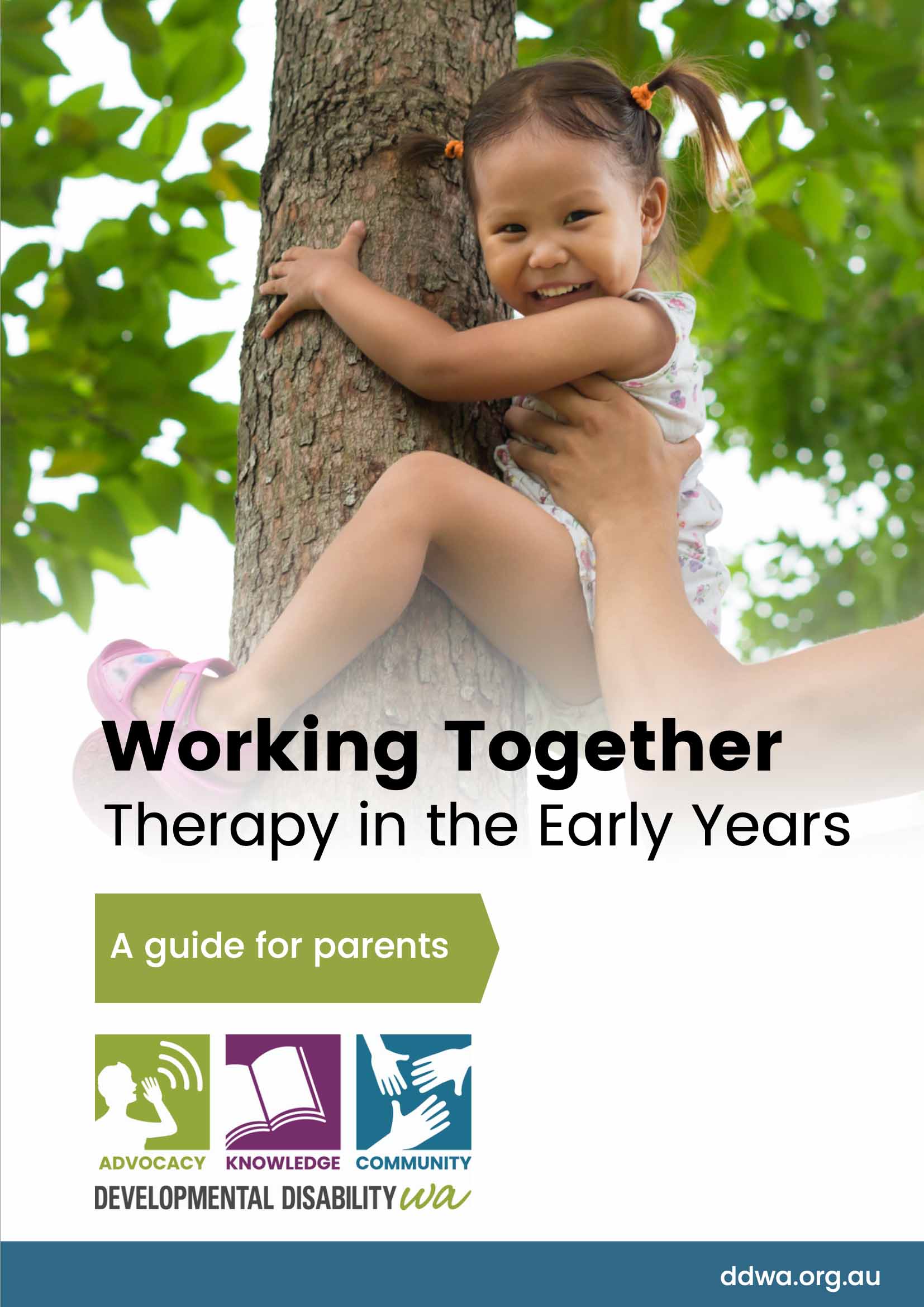
Working Together, therapy in the early years

Planning to go to the Dentist

Supporting School-age Children with Fetal Alcohol Spectrum Disorder

Autism Parents' Handbook 2025 e-Update

Your Dental Health

Coronavirus COVID-19 Information
Online Learning
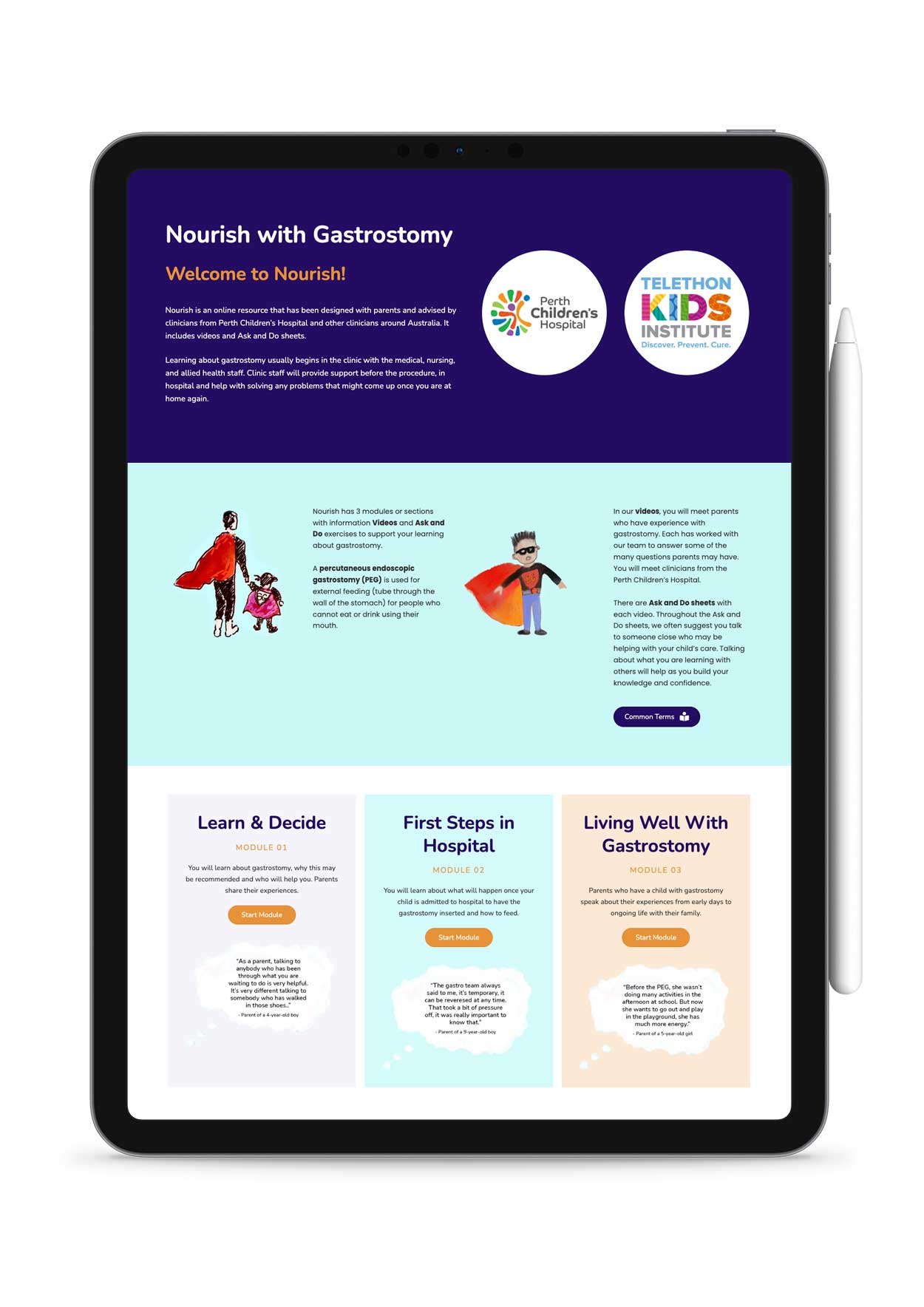
Nourish with Gastrostomy
Nourish is a free online resource that has been designed by the Telethon Children's Institute in collaboration with parents and advised by clinicians from Perth Children’s Hospital and other clinicians around Australia. It includes videos and Ask and Do sheets to help parents and carers learn about gastrostomy (PEG feeding) and care for their child at home.
You can access this course for free.
DDWA Services


Information, Guidance and Support
We provide information to people with disability, family members, carers and supporters, across Life Transition Stages to help you to Self-Advocate and Navigate Systems including:
- getting a diagnosis
- navigating disability services and the NDIS
- starting school and negotiating the school journey
- making friends
- turning 18
- getting a job
- staying safe and healthy
- starting a relationship
We also provide information and guidance to support you to self-advocate in any area where laws have an impact on the person with disability's life, such as information about State Administrative Tribunal (SAT) in respect to Guardianship and Administration matters, Child Protection, Enduring Power of Attorney, Advanced Health Directives and preparing for illness/death of a parent.
For a full list of the areas we cover, see our Focus Areas Page Here.
Cost – This is a free service.

Side by Side Peer Community
Side by Side began as a project in 2012 for families experiencing behaviour which could be seen as challenging. The project connects families experiencing challenging behaviour with other families though a supported peer group, an active online community and in person events. Side by Side is a safe place to receive support and help each other.
For information and how to join, contact:
Bronwyn Pike: bronwyn.pike@ddwa.org.au, or
Maggie Visser: maggie.visser@ddwa.org.au
Website: ddwa.org.au/services/family-peer-support-side-by-side
Independent Support Coordination
DDWA are a registered NDIS provider for support coordination.
We can support you to fully understand and implement the funded supports and services in your NDIS plan.
This service is currently at FULL CAPACITY.
Forms to help you prepare for an emergency hospital visit
Navigating the health and wellbeing of your family or the person you support can be confusing and overwhelming at this difficult time. DDWA are available to support our families and members to navigate this very important planning consideration.
These forms will help you to be prepared for if an emergency hospital admission is needed:
- Download and complete the Health Department’s Emergency Transfer Form.
- Download and complete the additional Medical Emergency Health Information Form (developed by Microboards Australia). This is not an official Health Department document; however, it has successfully been in use for several years now.
- Download and complete the Hospital Passport. This form provides a more detailed explanation of the particular needs of your family member.
- It is important to laminate any forms you wish to take to hospital, or seal them a plastic sleeve (a protective wipeable cover).
Don't have a laminator or printer?
If you do not have access to a printer or laminator, DDWA can help you. Follow these steps:
- Download and complete the form.
- Save and email the form to DDWA ddwa@ddwa.org.au. We will print onto light card, laminate and post back to you. ($10.00 payment is appreciated to cover our costs).
Step 01.
Step 02.
Step 03.
Step 04.
Laminate your form.

Other Resources

What I wish I had known
This research summary from The Kids Institute outlines the Tops Tips from parents of kids and young adults with intellectual disability and chronic health conditions, about what they learnt along their child’s healthcare journey. Some healthcare topics included epilepsy, dental care, and respiratory health.

Pain - A Guide for Parents

This document provides vital information about the support needs of my child with disability and/or additional needs. It aims to ensure that another person can take over from me in the event that I am unable to care for my child for any reason.
