
Safety
This page talks about how we can all support people with intellectual and developmental disability to stay safe.


When considering someone's safety it is important to:
- Adopt a human rights framework to ensure that all people have the same rights, including the right to have intimate relationships
- Address the person’s specific needs such as how they communicate, and provide supports to ensure the person's voice is central in decisions about thier life
- Create supportive environments to help safeguard well-being, and
- Ensure people with disability and their families have equal opportunities to thrive

Staying Safe in Relationships
People with disability have the right to enjoy relationships at all levels, whether it be friendships, relationships at work or an intimate relationship. It is important to focus on the benefits that relationships can bring, and provide support in ways that best fit the person's choices and needs. This means knowing and understanding the person well.
Supporting someone to develop the confidence and skills to have healthy relationships, might be about; raising awareness of potential risks, teaching self-advocacy skills and personal boundaries, as well as understanding the social cues and the intentions of others. There are lots of resources available to family and friends to help such as:
WA Government information on coercive control: https://www.wa.gov.au/organisation/department-of-communities/resources-and-translations-help-raise-awareness-about-coercive-control
SECCA is an organisation that supports people with disability to stay safe in intimate relationships:
https://www.secca.org.au/protective-behaviours-and-boundary-setting-workshop/
To support someone to make a safety plan to protect them from sexual, domestic and family violence, go to 1800RESPECT
To support someone to make healthy friendships and know what makes a good friend, and what makes a bad friend, see DDWA's Friendship Resources
You can help someone to stand up for their rights at work or in the community by developing self-advocacy skills. DDWA's booklet on Standing up For Someone You Love provides practical information to help you support someone to self-advocate.
Visit DDWA's Advocacy focus page for information on self-advocacy, other types of advocacy, and how DDWA can support you.

Supporting Financial Safety
Managing finances safely is crucial to safeguard against financial exploitation. There are many ways you can support someone with intellectual disability to manage and control their money such as:
- Work with a financial advisor and skilled support workers to establish secure and sound financial practices.
- Talk to the person you support about money management and how to keep financial transactions safe
- Connect with the MoneySmart initiative by the Australian Securities and Investments Commission (ASIC) for comprehensive resources on financial safety
- Read this fact sheet written by the Intellectual Disability Rights Service for information about Making financial decisions after turning 18
You can also access DDWA's Easy Read resources on Money and Budgeting. This includes an Easy Read TarHeel Reader explaining, " What is Money?" as well as information on:
-
- what to do if you have been scammed
- your rights to earn, save and spend your own money how you want to
- what you should know about how to manage your money.

Making Technology Safe
Knowing how to navigate the digital world safely is important to ensure our personal online security and protect against exploitation. Adopting safe digital practices means that people with disability can access digital technologies they need such as Apps and communication tools to maintain independence, and participate fully in the online community.
You can support someone to stay safe by:
- Keeping updated on the latest assistive technologies and support thier safe use
- Helping the person to use privacy settings effectively
- Talking about and teaching good online safety practices
You can build your digital safety knowledge and skills to support someone to stay safe by accessing information and resources:
-
- For guidance on staying safe online, especially tailored for people with disability, see the eSafety Commissioner website. This is an initiative of the Australian Communications and Media Authority (ACMA)
- To support young people with disability to adopt safe online practices, access this free Online Safety Training developed by Interaction Disability Services (through an Australian eSafety Commissioner grant).

Supporting Communication
Supporting someone to communicate their needs and wishes is a vital part of supporting safety and having a good life. Without the right support, unmet communication support needs will affect every area of a person’s life including personal safety.
You can support someone to stay safe by:
- Ensuring people have access to Alternative Communication methods such as picture boards, sign language, or communication apps. Visual supports like chat boards can be used to help people who find it hard to speak and people who find it hard to understand speech.
- Becoming familiar with communication disability and how to best support someone - View the Agosci website (The Australian Group Supporting Communication Inclusion.): AGOSCI exists to provide a community and a platform for people who may not rely on speech alone to understand or be understood by others, their families and carers.
- Engaging professional services to support communication such as speech therapy. Contact Speech Pathology Australia for guidance on accessing communication support.
- DDWA also has a range of information and resources about communication.
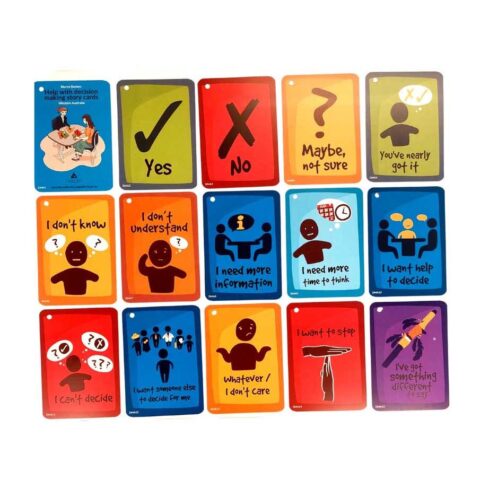
Supporting Decision-Making
People with disability have the right to make their own decisions. The United Nations Convention on the Rights of Persons with Disabilities (UNCRPD) outlines the rights of people with disability to dignity, autonomy, decision making, and recognition of legal capacity.
People with intellectual and developmental disability may, at times, need support to assess risks and make choices in challenging situations to stay safe and in control.
You can support someone to stay safe by:
- Using visual aids or social stories to support someone to understand potential risks and make safe choices
- For an example of social stories, see Raising Children Network
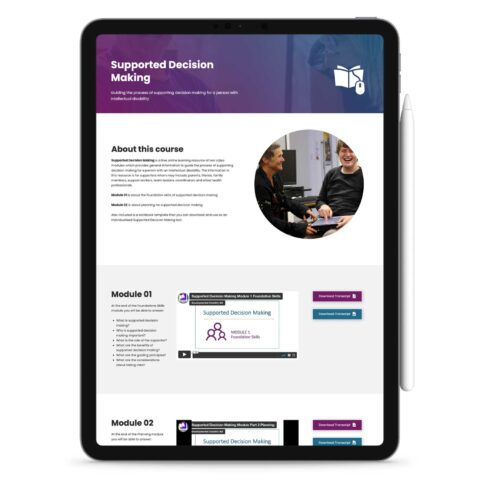
- Learn about supportive decision-making for a person with an intellectual disability. DDWA has a free Supported Decision-Making online course that provides practical information about supporting someone to make their own choices.

Creating Safe Spaces
Access and inclusion means creating spaces that accommodate universal needs, providing assistive devices, and offering the right support to enhance ability for all people to move independently and safely. It is not just about the physical layout, it also includes the sensory needs of people such as noise and light.
You can support someone to stay safe by:
- Ensuring physical spaces are wheelchair accessible and safe. This could mean the installation of ramps, handrails, or other accommodations. Become familiar with best practice and accessibility practices such as:
- Universal Design principles
- Disability and Inclusion
- For information about how the environment can impact someones physical safety and wellbeing, see the DDWA Behaviour Page
Easy Read Resources about Staying Safe

Our Staying Safe Easy Read page has information about:
-
- Understanding Coercive Control
- Safety and Violence - focussing on everyone's right to live without violence and how to get help
- Staying safe online
- Making a safety plan to be prepared for an emergency
- How to stop people calling you by using the Do Not Call Register
- How to keep your 'tap and go' bank cards safe
- Staying safe as a senior / older person
- Keeping your car safe

Staying Safe in Bad Weather
To keep everyone safe in an emergency, DDWA partnered with the Department of Fire and Emergency Services (DFES) to create Easy Read books about how to get ready for a cyclone, storm, flood or bushfire.
More Information and Resources
Organisations that may provide further support:
- Department of Communities - Office of Disability (previously, WA Disability Services Commission (DSC)): the government agency responsible for supporting people with disability in Western Australia. They offer a range of services, including information and resources related to safety, as well as funding programs for disability service providers.
- Carers WA: Carers WA provides support and assistance to family members and carers of people with disability. They offer resources, workshops, and counselling services that can contribute to the safety and well-being of both people with disability and their caregivers.
- WA Office of the Public Advocate (OPA): OPA acts as a safeguard for the rights and interests of people with disability. They provide advocacy, support, and information regarding the safety, decision-making, and rights of people with intellectual and developmental disability.
- Women With Disabilities Australia (WWDA) aims to improve the rights, safety and well-being of everyone that they represent: WWDA is run by and for women, girls, feminine identifying and non-binary people with disabilities.
- WWDA provides resources in Easy Read format on "Safety and Violence - How to get help": https://oursite-easyread.wwda.org.au/safety-and-violence/how-to-get-help/
DDWA Services


Information, Guidance and Support
We provide information to people with disability, family members, carers and supporters, across Life Transition Stages to help you to Self-Advocate and Navigate Systems including:
- getting a diagnosis
- navigating disability services and the NDIS
- starting school and negotiating the school journey
- making friends
- turning 18
- getting a job
- staying safe and healthy
- starting a relationship
We also provide information and guidance to support you to self-advocate in any area where laws have an impact on the person with disability's life, such as information about State Administrative Tribunal (SAT) in respect to Guardianship and Administration matters, Child Protection, Enduring Power of Attorney, Advanced Health Directives and preparing for illness/death of a parent.
For a full list of the areas we cover, see our Focus Areas Page Here.
Cost – This is a free service.

Side by Side Peer Community
Side by Side began as a project in 2012 for families experiencing behaviour which could be seen as challenging. The project connects families experiencing challenging behaviour with other families though a supported peer group, an active online community and in person events. Side by Side is a safe place to receive support and help each other.
For information and how to join, contact:
Bronwyn Pike: bronwyn.pike@ddwa.org.au, or
Maggie Visser: maggie.visser@ddwa.org.au
Website: ddwa.org.au/services/family-peer-support-side-by-side
Independent Support Coordination
DDWA are a registered NDIS provider for support coordination.
We can support you to fully understand and implement the funded supports and services in your NDIS plan.
This service is currently at FULL CAPACITY.