Curtin University’s two new new Graduate Certificates in Positive Behaviour Support (PBS) and Complex Communication Needs (CCN) are essential courses for Behaviour Support Practitioners and other allied health, disability sector workers, teachers, and family members who want to turn their lived experience into a professional career. There is a critical need for well-informed professionals who can advocate for human rights and create communication-accessible environments for both children and adults with communication disabilities.
DDWA strongly endorses these Graduate Certificates as a valuable opportunity to enhance your skills and help people achieve positive changes that improve their wellbeing, relationships, and overall quality of life.
Applications to study in 2025 are now open. Scroll down for links to course information and application links. Also scroll down for dates to attend information sessions.
The Positive Behaviour Support course provides unique learning opportunities that develop robust understanding about people’s underlying experiences and needs and how to build system capacity and capability to realise positive change in people’s lives that increases wellbeing, relationships and quality of life. It has been developed in partnership with lived experience educators and is presented in ways that are neuroaffirming and uphold human rights.
The Complex Communication Needs course provides unique learning opportunities that develop understanding and implementation of the practical skills that ALL practice leaders who support people with a communication disability should have in order to support relationships, experiences and environments that meet underlying needs and uphold communication rights.
The Graduate Certificate in Positive Behaviour Support (PBS) shares its first two units – Promoting Human Rights and Quality of Life; and Understanding Behaviour, Needs, and Experiences – with the Graduate Certificate in Complex Communication Needs (CCN). These foundational units underpin the knowledge bases and skills that everyone working within the disability sector needs to partner with people in ways that meet their human rights, seek to improve their quality of life and work towards meeting underlying body and brain needs to prevent adversities and stress experiences. This foundation positions enrolled students to recognise the underpinning knowledge and mindsets that underpin how we each see our role in supporting people to meet their foundational needs.
The specialist PBS units focus on how we translate understanding to practice with a significant focus on the skills required to build the capability of environments and supporters in working towards meeting people’s foundational underlying needs.
This course sits alongside the Graduate Certificate in CCN. This is purposeful as a primary element of realising PBS capability is building communication capability. This includes the practical skills of being an effective communication partner.
The specialist CCN units focus on how practice leaders can promote system approaches to being communication capable, how to partner effectively with children and adults with communication disability and how to build the communication support skills of the people in their everyday lives across settings. The specialist units also focus on how to build capability in everyday practice of communication support for people whose access to communication is complex, impacted by factors such as significant motor, sensory or cognitive challenges.
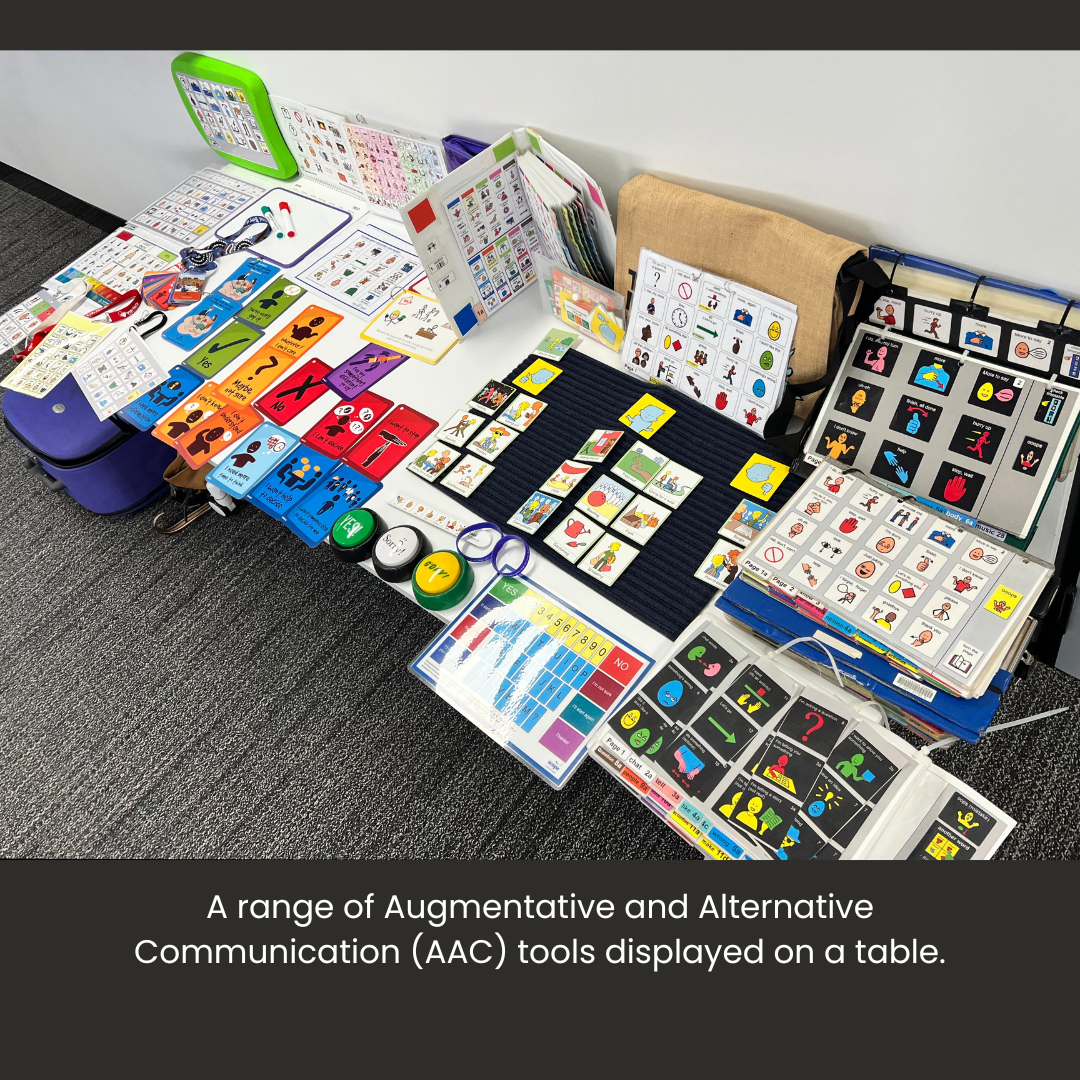
Both courses represent essential knowledge for people in roles supporting people with disability including Behaviour Support Practitioners, Speech Pathologists, Teachers, PBS practitioners, Occupational Therapists, Alternative and Augmentative Communication (AAC) specialists, Disability Practice Leads and disability providers.
What will you gain from completing one or both courses?
- Knowledge and skills in promoting human rights and quality of life as co-taught by lived experience educators (children and adults with disability);
- Foundational understanding of experiences, needs and behaviour that underlies capability of support networks and is foundational to preventing adverse experiences;
- Recognition of individual and systemic approaches to build capable communication environments and the practical skills of what good looks like in meeting needs and enhancing wellbeing, inclusive of communication capability;
- Knowing and practicing the core skills that promote regulation;
- Skills in knowing how to communicate with and promote communication and information access for people with complex communication access needs;
- Practical skills in knowing how to partner with children and adults to support self-determination and decision making in both knowing about their experiences and planning alongside them;
- Confidence in coaching and upskilling colleagues to provide effective communication support and access;
- Skills in how to support systemic change, with a specific focus on how to enact practice leadership to realise communication capable environments;
- Knowing the essential components of good PBS planning in response to changes in people’s coping and wellbeing; and
- Realising and embedding system change principles through partnership, co-design and co-production, centrally focussed on partnership with the person and their direct supporters in the planning process.
These skills are an essential foundation for all practitioners when meeting practice standards and upholding the rights of people with disability. Practice leaders who recognise the need to build capability within networks of support to promote quality of life and reduce adversities should consider doing these courses.
APPLY NOW for study in 2025 and take the next step towards transforming your practice and enhancing the lives of people with communication disabilities.
For more information contact Course Coordinator Karen Wylie on:
Karen.Wylie@curtin.edu.au
Tel | +61 8 9266 4905

You can also access information about both the CCN and PBS certificates through the following links:
Information Forums
Curtin is also holding some information forums for anyone across the education and disability community services sector, that you are welcome to attend to find out more and ask any questions.
To register for these please register through the following Eventbrite links.
Session 1: Tuesday 3rd December, 4pm, AWST
Session 2: Wednesday 22nd January,2025. 4pm, AWST
Information Flyers
- Graduate Certificate in Complex Communication Needs (CCN): https://ddwa.org.au/wp-content/uploads/2024/11/Curtin-Flyer-A4-GradCert-CCN-2025.pdf
- Graduate Certificate in Positive Behaviour Support (PBS): https://ddwa.org.au/wp-content/uploads/2024/11/Curtin-Flyer-A4-GradCert-PBS-2025.pdf
- Information forums for both Graduate Certificates in CCN and PBS:https://ddwa.org.au/wp-content/uploads/2024/11/Curtin-GradCert_CCNPBS-InfoSessions2025.pdf